
“The prominent claws on a sloth’s foot are also known as TOES. There are TWO-TOED sloths and THREE-TOED sloths – and a total of SIX KNOWN SPECIES.”
National Geographic Kids, 5,000 Awesome Facts
I finished the 35 facts on Alaska, so now I am researching 25 things about sloths from the National Geographic Kids book that I happened to pick up when I was out and about with Charley Waffle. The book dates at 2015 and I just wanted to see if facts were still relevant in these days so I am going through each 5,000 facts in this book. Should take me awhile and by the time I’m done it will be time to recheck again. Here I go with the next segment of facts labeled “25 SLUGGISH FACTS ABOUT SLOTHS.”
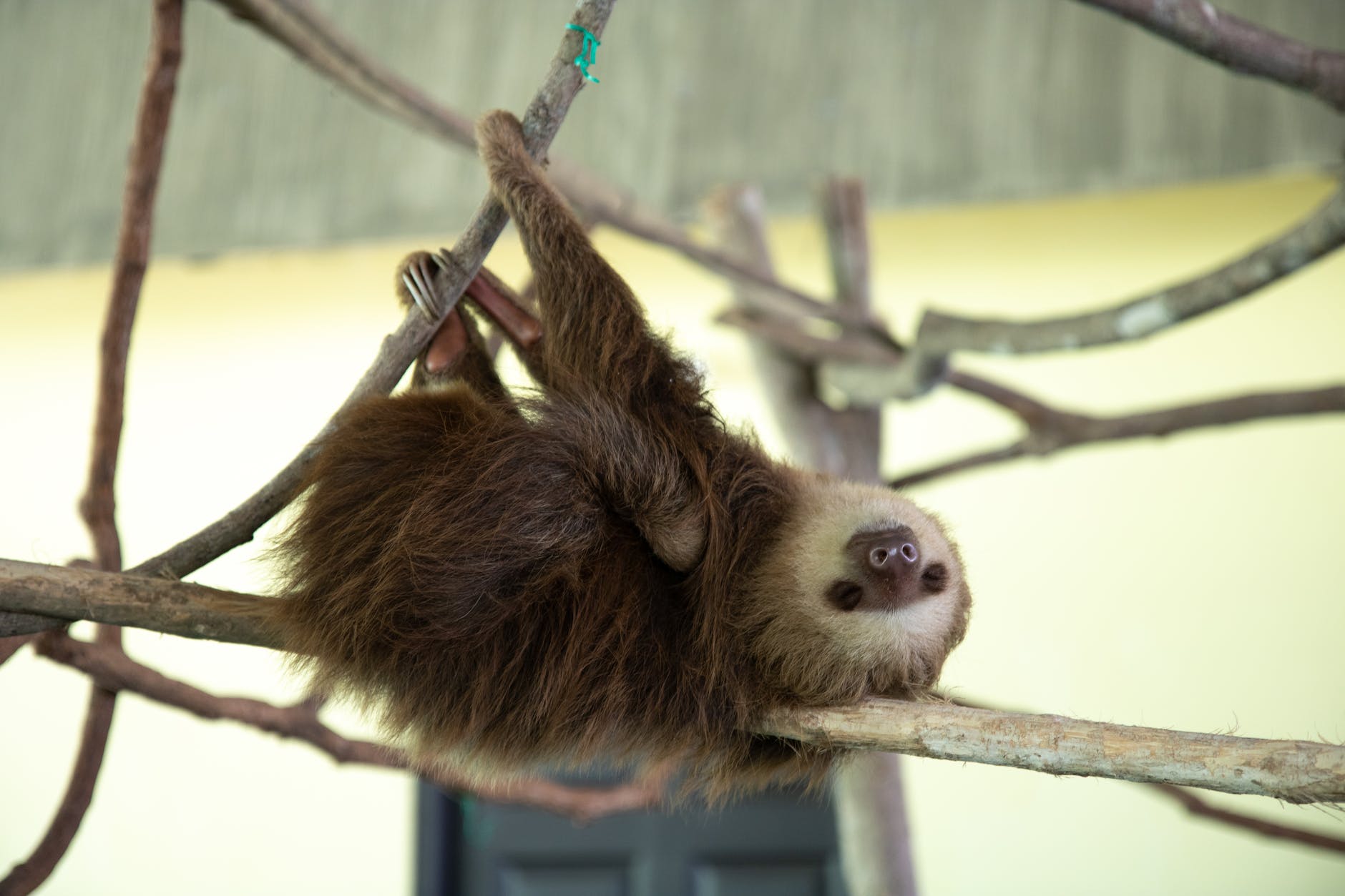
There are 6 different types of sloths, with 2 categories being they are either a two-toed sloth (Choloepus) or a three-towed sloth (Bradypus). All sloths, however, have 3 toes on each rear limb.
They are called “sloths” because they have very deliberate movements and a very low metabolism. ‘Sloth’ means lazy or slow.
In scientific literature from 1749 labelled them as “The lowest form of existence.”
The 6 types are:
- Pygmy three-toed sloth
- Maned sloth
- Pale-throated sloth
- Brown-throated sloth
- Linnaeus’s two-toed sloth
- Hoffman’s two-towed sloth
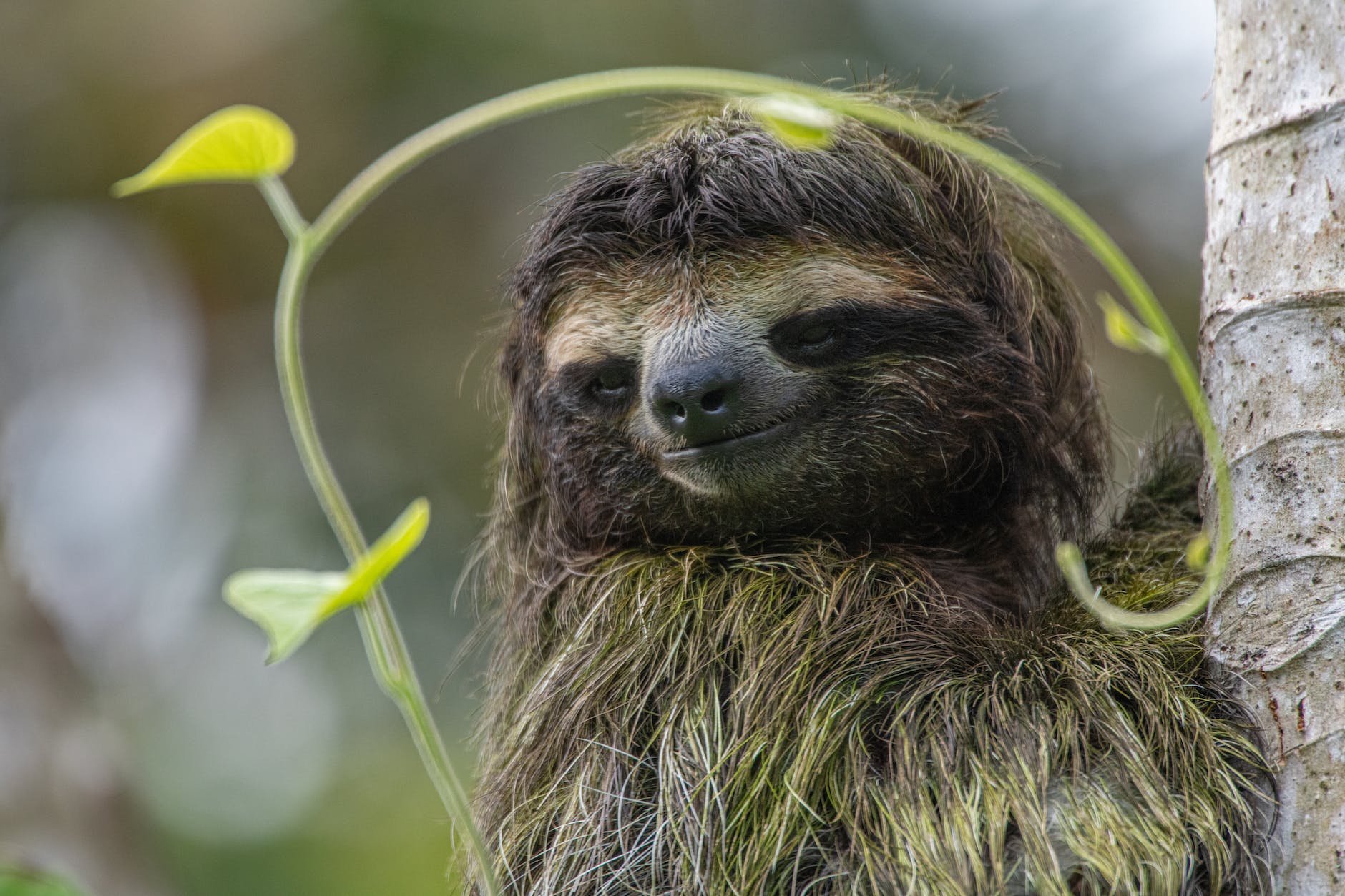
All types have flat heads, big eyes, small ears, short snouts, long trunks and four long limbs, with the arms longer. The two-toed sloth is a little bit larger and more nocturnal and has 46 ribs to support their large stomachs. The three-toed sloth has more facial coloring that make them look as if they are smiling. They are more active in the day and have more vertebrae(9) than the two-toed (6) allowing them to turn their heads 270 degrees.
They are considered CRITICALLY ENDANGERED with less than 100 sloths due to logging. You can go to the SLOTH CONSERVATION FOUNDATION and make a donation that will help conserve these animals.
Sloth Conservation
Wikipedia
More sloth facts to come…..
 CHARLEY WAFFLE