
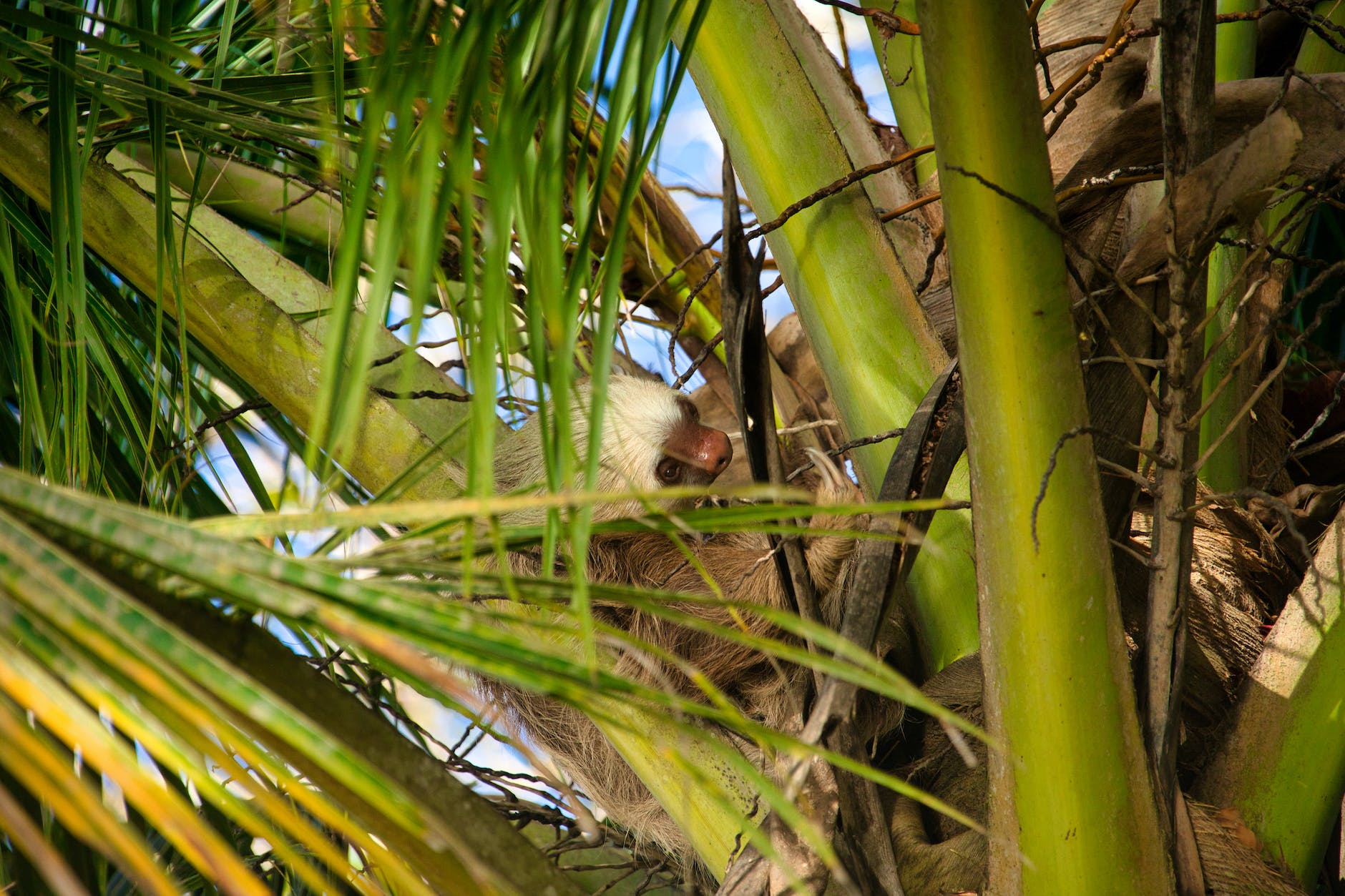
“Most sloths in the wild are TINTED GREEN because of the ALGAE growing on their coat. This hue helps them BLEND into their HABITAT.”
National Geographic Kids, 5,000 Awesome Facts Fact 14
Sloths originally have brown fur, but is coated over time with algae, turning it a faint green.
But first, algae is the plural form of alga, which means “seaweed” in Latin. Algae are important in the Eco-system due to the number of nutrients in it that are beneficial to many different food chains, mainly in aquatic situations, but also in sloths.
Algae are simple plants that live in rivers, moist soil, lakes and oceans. And sloths. They grow in many forms where some consist of one cell and are microscopic, or made of many cells that form strands or colonies. When nitrogen and phosphorus build up in excess of naturally occurring nutrients in the water, thick forms of algae are formed. Sources of the nutrients are things like grass clippings, improperly functioning septic tanks, and yard waste. Or in sloths where their fur happens to have these tiny grooves that trap water, making it a prime location for algae to flourish.
Because of their slow movements, green tint, and hanging out in trees, algae helps the sloth become almost undetectable by blending into it’s environment. They are able to go unnoticed by predators, especially movement motivated hunters and trackers.
The sloth and algae form a unique friendship in the fact they both flourish from each other. Algae can strive in a sloth’s fur while the sloth can go on living undetectable in the forest.
 CHARLEY WAFFLE