
“Huge SWIMMING sloths-named THALASSOCNUS– lived along the BEACHES of PERU eight to four million years ago”
National Geographic Kids, 5,000 Awesome Facts, fact 18 on sloths
They got their name from a Greek word “thalassa”, which means sea, and Ocnus, a deity from Greek and Roman mythology that represents the “wasting of time.”
The definition of the thalassocnus is an “extinct genus of semi-aquatic ground sloths from the Pacific South American coast.” They come from the group xenarthran, which includes sloths, anteaters and armadillos. The sloth is the only one that is aquatic. They evolved over a course of 4 million years and several marine adaptations.
Some of these adaptations were where they developed denser and heavier bones to counteract buoyancy, such as modern day manatees. Their internal nostrils were located further into their head to help with breathing while becoming completely submerged, and their snouts became wider and elongated to help with consumption of aquatic plants.
The head was also angled further downwards to aid in bottom feeding. They had a longer tail that was probably used for balance and diving, just as a beaver. They also started to increase in size. One species was found with an almost complete skeleton measuring from snout to tail at about 8.4 feet.
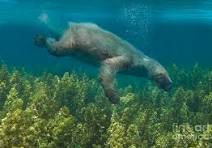
It’s believed that they probably first walked across the seafloor and dug up food with its claws. The early ones probably grazed eating seaweed and sea grasses close to the shore whereas later species focused on sea grasses farther off the coast. Their enemies probably were sharks and sperm whales. Thalassocnus were “found in formations with large marine mammal and shark assemblages.”

They became extinct due to a cooling trend that followed the closing of the Central American Seaway during the end of the Pliocene, which killed off much of the sea grass off the Pacific South American coast.
 CHARLEY WAFFLE