
I went on my second D & D campaign. I am feeling confused and a bit intimidated.
And from what I understand that isn’t the way D & D is supposed to go down. I thought people played to have fun. I am feeling more stress than enjoyment.
Luckily, there’s someone else new to D & D like me. We both lack experience in this cool community, and he feels the same way. I asked why he wanted to try D & D, and he said his therapist recommended it.
It’s funny, because I happened to tell my therapist about D & D, and she was really interested but didn’t know how to start. She wants me to explain it to her. She also mentioned the show “Stranger Things,” where kids play D & D and are in a fantasy world to battle fantasy creatures.
I know a bit about Stranger Things because I watched the first two seasons on a special Netflix offer. Unfortunately, I had to cancel my Netflix subscription. They have some great shows, so I’m a bit disappointed, but I needed to cut down my subscriptions as they were getting too expensive, and I really want to limit my TV time. I am starting to become a couch potato.
2nd Campaign
My 2nd D&D campaign the group played had a 10-year-old boy with a cool castle-shaped dice roller, his dad, a few others, me, another newbie like me and with my friend, along with the dungeon master. We split into two tables. Our table was going to battle this giant owl.
From the beginning, our D.M. (Dungeon Master) said he removed a player named Schnitzerfritz permanently for being “that guy.” I don’t really know “that guy” means or what he did wrong. I just want to avoid being “that guy” and getting kicked out of the D&D group, which makes me feel anxious. That’s the feeling I’m trying to share.
After our table and group defeated this giant owl, the D.M. mentioned to the other newbie at the table (Joseph) that he really needs to read up on his character sheet and get to know how and what roll he needs to do. He was somewhat reprimanded that he should know that every action requires a D20 die. I kind of know that, but I also know that some rolls include some of the other die. And when do I use them??
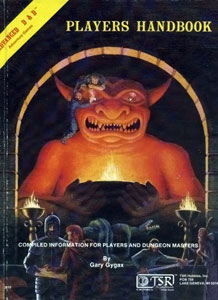
Luckily, my friend knew that Joseph and I were having some difficulty, so he offered to meet us at a game store to review the dice and some player rules. There’s a D&D Player Handbook available for $50. I recently realized how pricey these D&D books can be. They also offer a D.M. guide, a Monster guide, and various campaign books, all starting around $50.
I looked at some dice for sale. My nice set cost $11.95, but I saw others made of real stone going for $110.00 for the 7 dice needed to play. The miniatures alone start at $5.99 and go up from there. Some people playing had tubs full of these miniatures.
In my quest to understand the game a bit more I chose to look at the beginnings of D & D and various explanations from websites to help me understand a bit more. Here it goes….
D and D‘s Beginnings
D and D was invented by 2 guys, Gary Gygax and Dave Ameson in the early 1970’s. The game was first published in 1974. It has over 45 years of history, 5 editions, and comic book adaptations, countless source books.
In 2004 it was the best and known role playing game(RPG) in the U.S. with more that $1 billion in book and equipment sales worldwide. It’s popularity grew over 51 percent in 2018. https://en.wikipedia.org/wiki/Dungeons_%26_Dragons
What it’s about
It is a game of imagination where people take on different roles and enter a fantasy world. The D.M. (dungeon master) leads the game, narrates the story, and creates the world. He manages the challenges players face in the game. They usually use a game guide for this. They are like the story tellers.
Game Mechanics
Each player creates their own player character (pc) and records it on a character sheet that has their ability scores. There is strength, charisma, constitution, intelligence, wisdom, and dexterity. Characters are forest elves, druids, barbarian, wizard among others.
Players will be asked to make “skill checks” to determine the outcome of an event or encounter. To perform a check, this is where the other dice come into play after rolling the D20 (20-sided die). The D20 determines whether a hit is made in combat , and the other dice such as D4, D6, D8, D10 or the 12D die is used to determine how much damage was dealt.
Other than that, use your imagination, and play as a group that’s setting out to defeat the same objective. Don’t break up the team. It seems easy.
These two websites explain it better than I can:
I am leaving this afternoon to go on my 3rd D N D campaign. It will be fun. I am sure I can master the mechanics in time.
 CHARLEY WAFFLE
Leave a comment