
” There are more plastic flamingos in the USA than there are in the wild.”
-1411 QUITE INTERESTING FACTS
Flamingos are very social, wading birds that prefer primarily inhabiting fresh water lakes, lagoons, mangroves, but can survive in salt water due to a gland under their eyes that removes extra salt from their bodies.
Due to a certain bacteria in the water, and beta carotene in their meals allow them to turn a bold pinkish color.
A group of flamingos is called flamboyance.
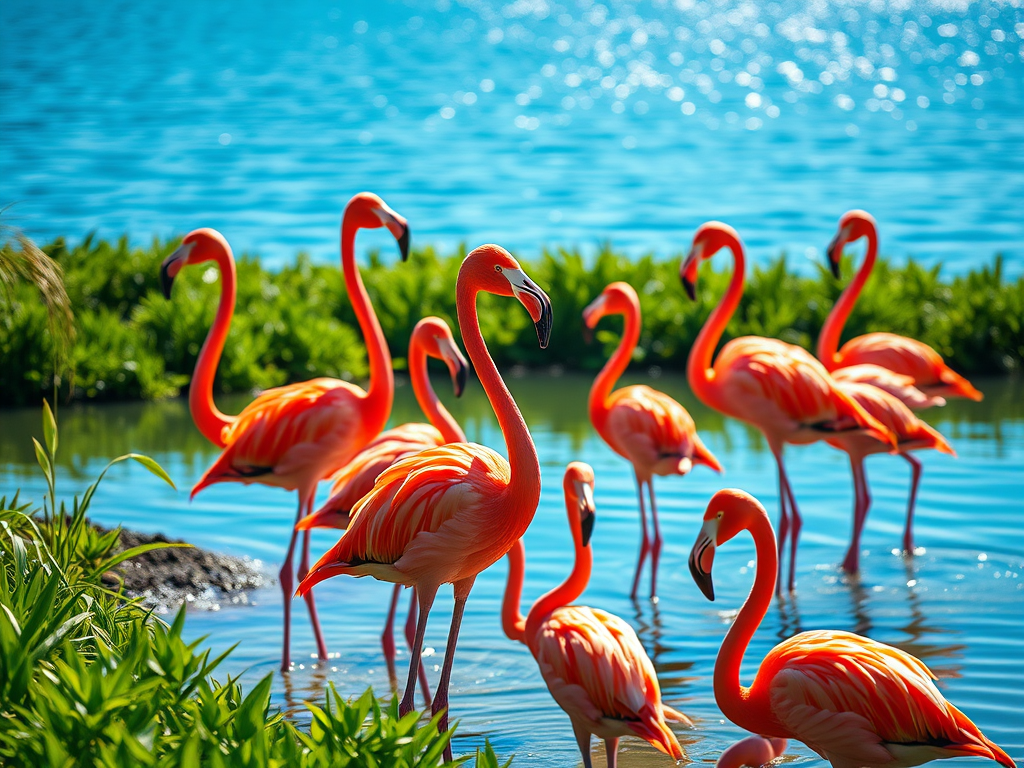
The definition for flamboyance is as such; “the tendency to attract attention because of one’s exuberance, confidence, and stylishness,” and “the quality of being bright, colorful, and very noticeable.”
Other definitions of a group of flamingos are; colony, a stand, or a flock.
I prefer the flamboyance definition more myself. It’s more fitting and fun. And flamboyant!
They usually stand on one leg, yet the reason for that is not really known.
They have webbed feet which allows them to swim along with their flying abilities. Flamingos in captivity get their wings clipped so they do not fly away.
In 2005, a pair that did not have clipped wings escaped from a Witchita, KY zoo in which one of them was found 10 years later in Texas.
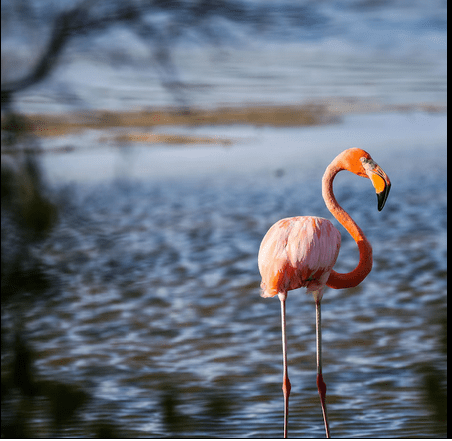
The lifespan of flamingos is about 20-30 years in the wild, and about 50 years in captivity. The oldest one in captivity was 81 years old that lived in a zoo in Australia.
The lifespan of a plastic flamingo is, if properly cared for, infinite.
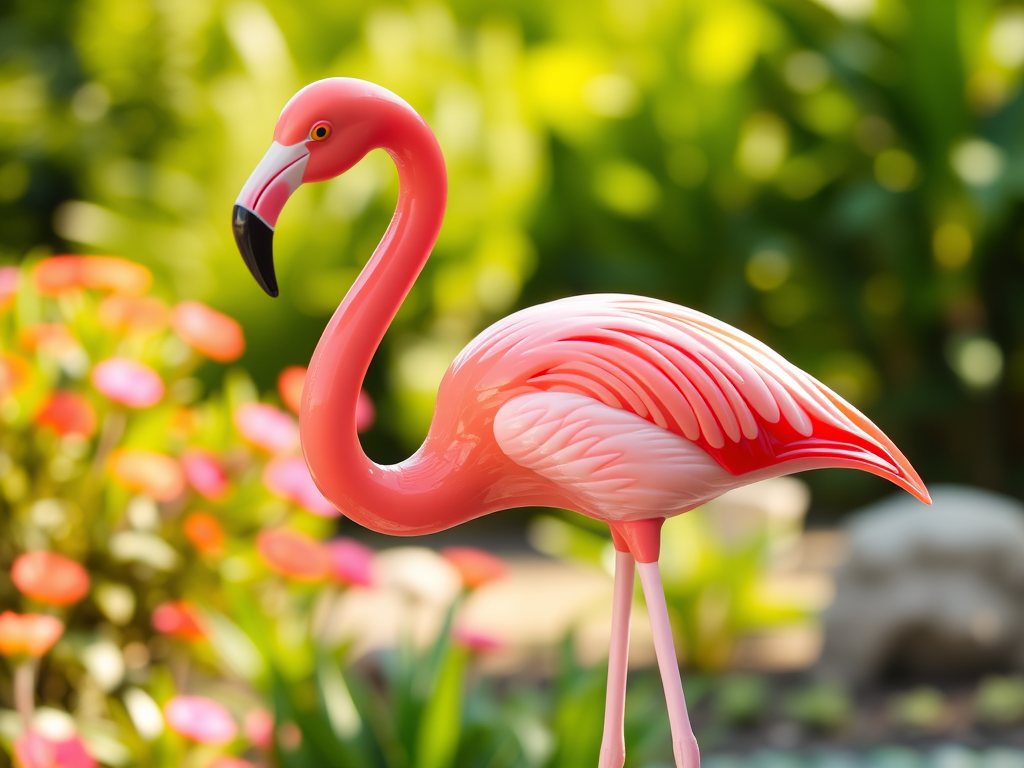
The pink lawn flamingo was originally designed in 1957 by Don Featherstone after being inspired by a picture he saw in National Geographic. He decided he wanted to make it into a lawn ornament.
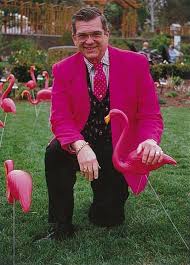
He was working at Union Products, who ended up mass producing the plastic flamingo. He often wore flamingo colored clothing. Ultimately the plastic flamingo earned him a 1G Nobel Peace Prize for ART in 1996. “Ig Nobel Prizes are awarded for achievements that make people LAUGH, then THINK. For example: after something has been discovered or created, no one – anyone, anywhere, ever – can later be the first to have made that discovery or creation.” (https://www.flamingosbynight.com/plastic-flamingo-history/)
They were initially sold in pairs, all of them with his signature located on the bottom of the flamingos at first. However, Union Products tried to sell them without his signature in 2,000 after his retirement, but had to stop in 2006, Nov 1st due to a boycott. Since 2015, over 20 million fake flamingos have been sold.
There are roughly 1-3 million live flamingos in the world, as opposed to 20-30 million plastic flamingos.
In 2009, Madison, WI designated the plastic flamingo as the city’s official bird.
Don Featherstone died in 2015, June 22nd of Lewy body dementia. His plastic flamingo lives on.
 CHARLEY WAFFLE
Leave a comment