
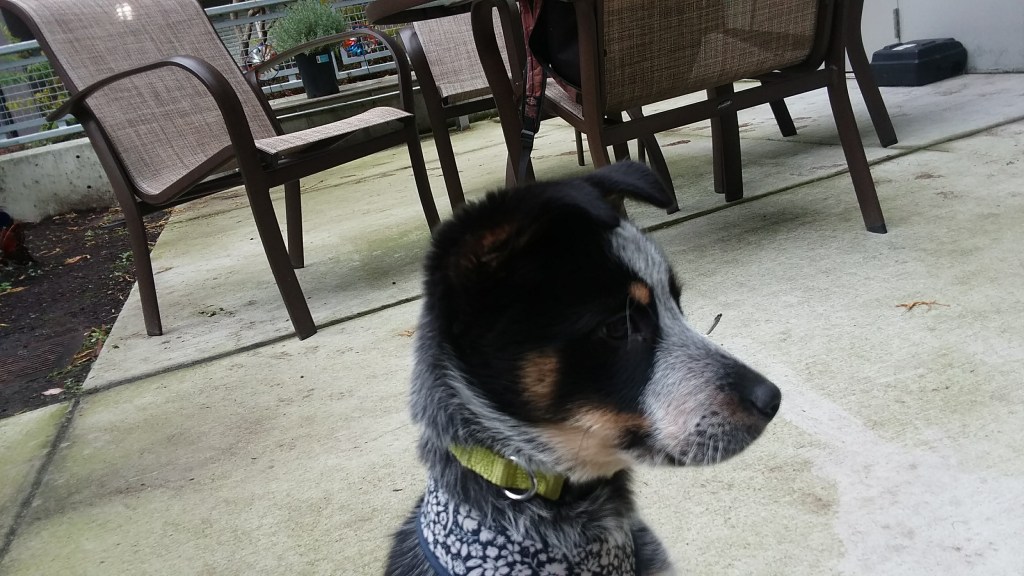
I have witnessed this, and was guilty too, of getting a puppy based on impulse and how cute the puppy is and still is. Even though Charley’s turned into a beautiful teenager, she was a little fluffy thing at 6 weeks old and cuter than snot.
I got Charley Waffle first because, just look at her, and I wanted a dog to go walking or hiking with, and I liked what her adult size would be, which is about 35-40 lbs. What I didn’t do was consider or research as to what kind of breed she is, even though people barely warned me how energetic and super scary smart this breed, Australian Shepherd/Collie is. I’ve now gotten used to her and do things daily now to keep her interested and motivated and to run her to get that herding energy out of her for the day. It is a daily must that she gets in a good 1-2 hour full of running and playing, although I think she’d be happier with a 3-5 hours worth of running after sheep.
Herding as been difficult for I am not near a farm, nor do I own any sheep. I did happen to look up sheep rental and found a couple farms that actually let people bring out their herding dogs and get to herd away, just what she was bred to to. If you have a herder dog you may want to call around or look online for farms that actually provide that service.
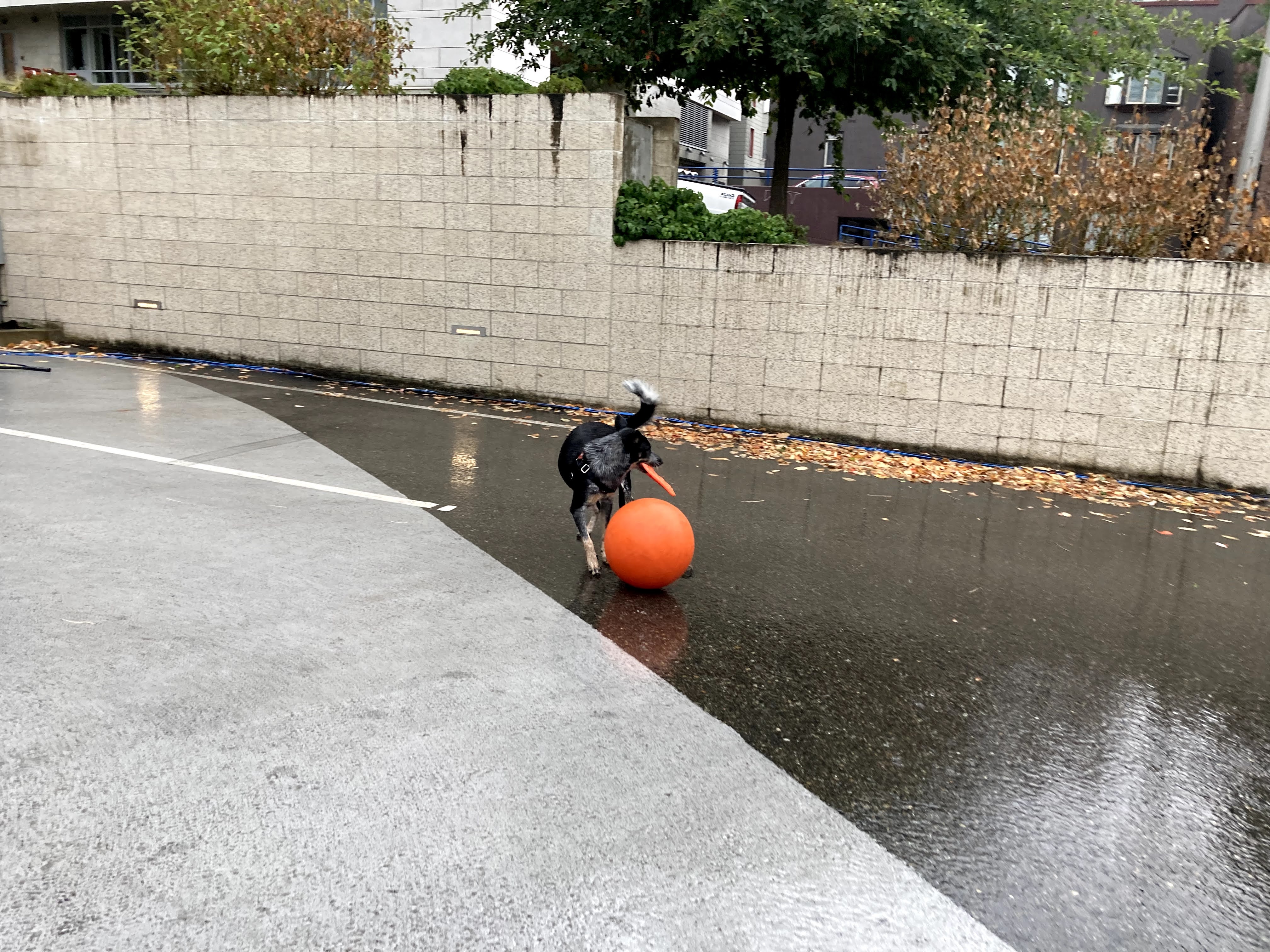
My routine with her is to actually have a few balls, large and small, that we start playing with and sooner or later she ends up “herding” them all in one spot. It’s actually quite amazing for there are times I will be looking for a stray ball and turn around and she has all of them in a little circle sitting right by her. Also, what we did on Saturday is pull out what I call her “big ball.” It’s amazing. It’s called the “Indestructible Ball” and can be found on many dog stores online. It’s about 24″ diameter and its in hard plastic so it will not destroy easily. When I first bought her one her eyes lit up and immediately she started pushing the ball around with her nose. It has been a game changer and a great babysitter for she will only have eyes for that ball when it is out. I have to put it away in a bag so it will be out of sight, out of mind. Otherwise she’d be begging and bugging to play with that thing every day and all day.
Dogs were bred a long time ago for certain abilities. There are dogs that are great for retrieving, such as Golden Retrievers (imagine that) and Labradors and Rottweilers. The Newfoundland has the instinct to rescue, and the American Terrier for child care, and hound dogs that are bred to hunt. Sometimes these instinctual traits get them in trouble, such as dogs bred for guarding that are too good at what they do and get in trouble for being aggressive. A herding dog will get in trouble by trying to herd cars, chase little ones like children, and run after bicyclists and joggers. Charley sees a group of children and I have to call her to my side for I know she will try to herd them into a little circle, especially if they are being rambunctious. She now knows immediately to come to my side and sit when she sees children, but I still have to be careful.
Knowing what your dog was bred to do makes it a lot easier to train. A Lab will retrieve a lot easier than a herder. Charley knows how to retrieve yet she does it reluctantly. Our play time has to be interactive or else she gets very, very bored. I had to giggle when somebody who had just got a herding dog announced to everyone that he had trained the herding instinct out of his dog and now made it a retriever. Maybe he was able, but I think once a herder, always a herder. The behavior will come sneaking back up here and there. Going against a dog’s instincts will make training more difficult. Of course there are always exceptions.
However, lap dogs are great for laps, for that is why I believe is how they got their nickname. I don’t know if that was bred into them, but it seems to fit for a lot of dogs I’ve seen are happy being situated on their owners lap. Possibly for comradeship and comfort to and for their owner. I don’t really know, for I have quite the opposite. However, I don’t know where Great Danes got the idea of being a lap dog, but they sure think they are. Exceptions to everything.
In this book, “What All Good Dogs Should Know” by Jack Volhard and Melissa Bartlett, they say a happy dog is a trained dog. These are the rules for a good dog;
- Be House trained
- Come when called
- Have no bad habits*
- Stay when told
- Not pull when taken for a walk
They defined bad habits as the dog not jumping on people, chewing up things, or barking all day. They also said that trained dogs are free dogs, and that makes sense. It’s nice to be able to take Charley out and I can take her places and let her off leash in certain areas without worrying that she won’t come when called, or walking around the lake without pulling my arm out and making it a miserable time for me. Or even meeting new people and know she will not jump up on somebody and risk injuring them, plus the person not wanting a dog putting its paws on them.
There are many training books and training videos on YouTube that help with training your dog in all those areas. It’s just a matter of figuring out what your dog will respond to better than other things due to their breed and temperament.
I’m not saying Charley is totally trained, for she does get on people sometimes and she will pull occasionally in where I have to resort to what I call Puppy 101. I have to stop as soon as she starts pulling, turn around until she’s following me, then start heading on our way to where we were going. I will do that every time she begins to pull until finally she realizes we will get to our destination sooner if she walks without pulling me. I think I did that one day almost 100 times until she got the clue. Persistence pays even if it may be a pain in the butt at first.
It pays to do some research when picking out a new puppy so there won’t be any in-bred behaviors you may not totally be aware of. It does make understanding your dog and training them a lot easier. Really and truly!
 CHARLEY WAFFLE