
The Five Most Horrifying Bugs in the World
According to “You Might Be a Zombie and Other Bad News” – shocking but Utterly True Facts, from Cracked.com, # 5 in this countdown is the Japanese Giant Hornet. It is the largest species of a hornet in the world. It’s also called the Japanese Murder Hornet.
It’s about the size of a grown person’s thumb, or about 3 inches, and can shoot flesh-melting poison. It is labeled as the most painful of all stings.
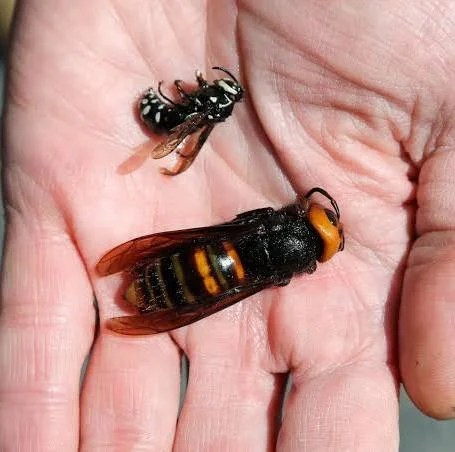
The pain feels like burning fire in your veins according to victims. Not only does the first strike hurt, but they do not lose their stingers and will repeatedly hit over and over, sometimes resulting in fatal anaphylactic shock.
Their stinger is roughly 6mm (1/4″) in length, and can pierce through thick clothing, included standard leather beekeeping suits.!
Their venom is a complex biochemical cocktail that attacks multiple fronts. As follows;
What does the venom contain?
The venom has cytotoxins, which leads to tissue destruction. Cytotoxins are certain substances that are toxic to the cells in the body, capable of physically break down cellular membranes causing localized necrosis. It also destroys skin tissue which leave permanent crater-like scars. Chemical make-up is as follows;
- Mastoparan – degrades immune cells, causes inflammation, and causes the body to produce histamine. Histamine is a chemical messenger that your immune system produces to help your body to communicate and defend itself. When your body comes in contact with something it thinks is a threat, it will cause blood vessels to become “leaky”, which in turn allows white blood cells to rush to the affected area.
- Mandaratoxin: Neurotoxin that attacks the nervous system. It can lead to renal failure, organ and tissue damage, necrosis, and fatality. The giant Japanese hornet kills roughly 30-50 people a year in Japan, usually not from the venom toxicity, but rather from severe anaphylactic shock triggered by allergic reactions to the stings. (https://justjapanstuff.com/2020/06/30/theyre-not-murder-hornets-giant-japanese-hornets/comment-page-1/)
- Phospholipase A2: An enzyme that breaks down cell membranes, causing surrounding tissue to break down and melt.
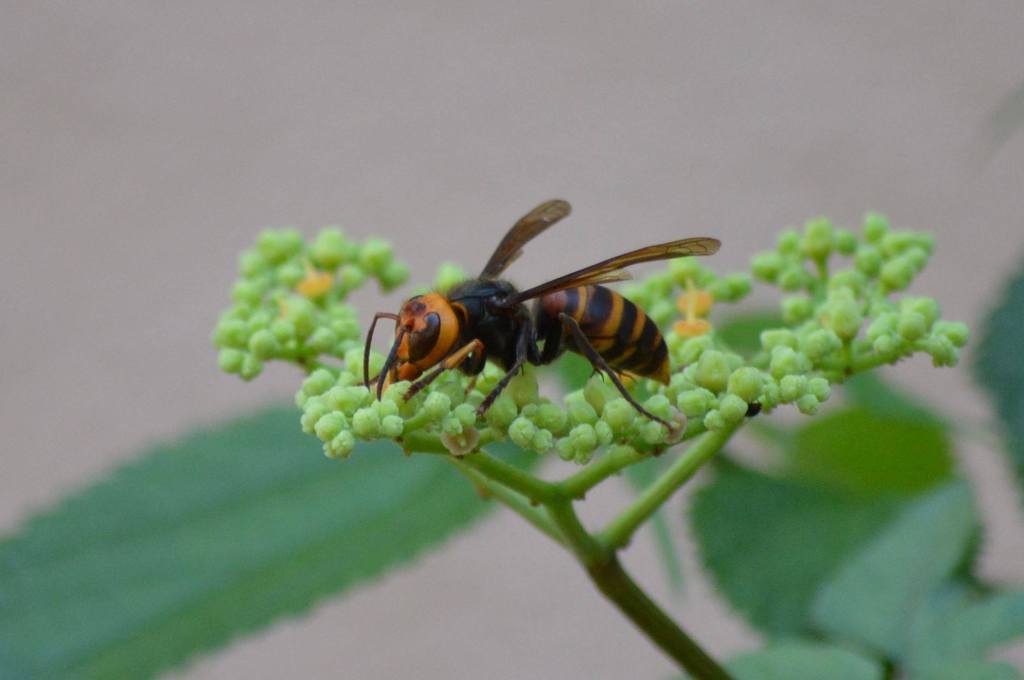
Where do they live
It is native to temperate and tropical East Asia, South Asia, mainland Southeast Asia, and parts of the Russian Far East. They did make a short appearance in the Pacific Northwest, but were eradicated.
WHAT IF STUNG?
First of all, move away. Pretty simple. Do not swat at the insect, for this can bring more unwanted stings, and for the hornet to call upon it’s comrades to come and join the stinging party.
Wash with soap and water, and put a cold compress to the sting site. Use hydrocortisone or calamine lotion on the sight. Take antihistamines to lessen allergic reactions.
EMERGENCY; Seek emergency if difficult breathing, swelling of the face, lips, throat and tongue. If you become light headed, dizzy and fainting. Also, if there is vomiting, diarrhea or hives spreading rapidly, seek medical attention immediately.
Hornets on honeybees
Japanese “murder” hornets are known to destroy whole honeybee colonies by decapitating the adults. They send in a scout who marks the hive with pheromones who in return comes back with a swarm of hornets. They infiltrate the hive for days, using the larvae and pupae and honey for their own nests.
Native honeybees, however, have developed a defense called “hot bugging.” Hundreds of the bees will swarm together in a ball and surround the scout, and vibrate their flight muscles to raise the core temperature of the ball to around 46° C (115° F). The honeybees can survive in this temperature, whereas the hornet literally gets cooked alive.
(https://www.nationalgeographic.com/animals/article/asian-giant-hornets-arrive-united-states)

 CHARLEY WAFFLE
Leave a comment