
“Croquet made its first and last appearance at the Olympics in 1900. The matches also marked the first time that women competed in the Games.” – “Uncle John’s Did You Know”
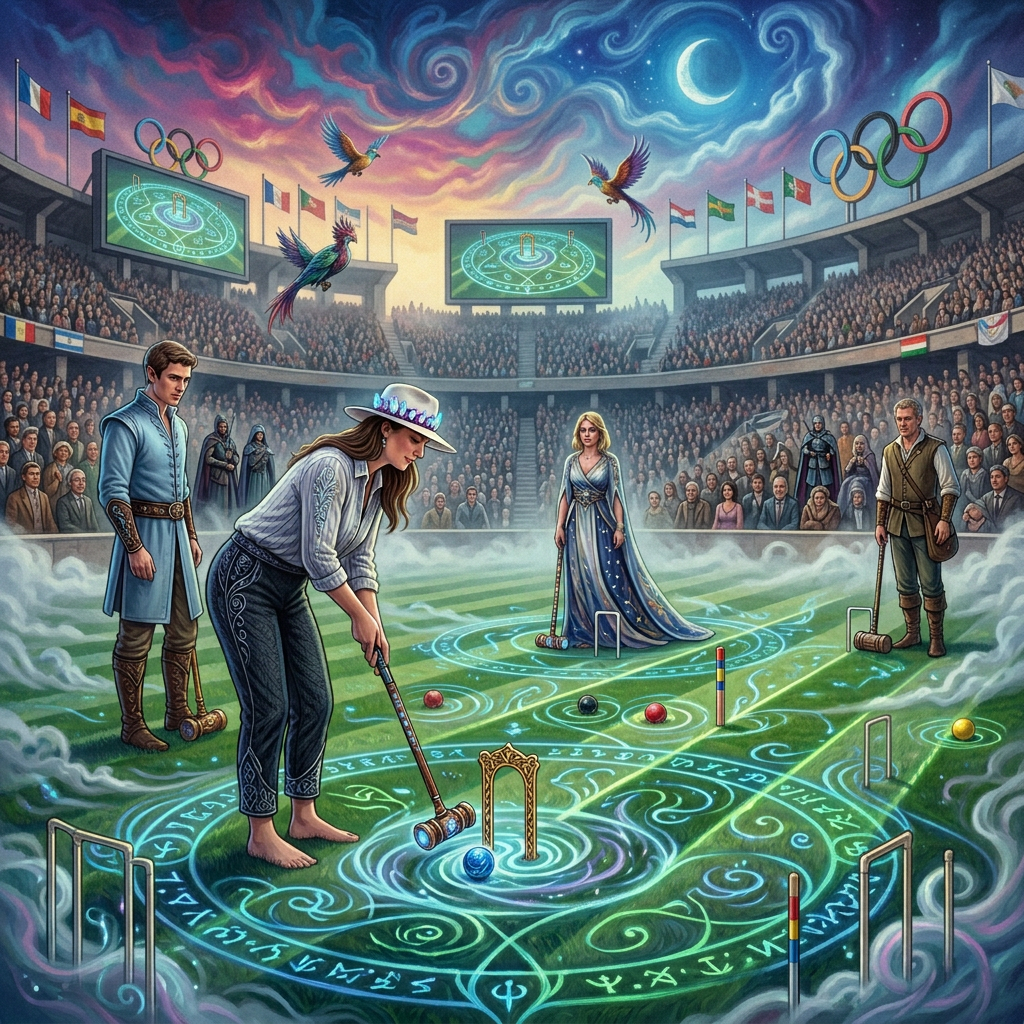
“Croquet is a sport that involves individuals, or teams, hitting wooden, plastic, or composite balls with a mallet through hoops (called wickets) against a central peg that are embedded in a grass playing court. The game ends when a player, or a team, reaches a predetermined number of points.”
It is one of the few sports that allow men and women to compete on equal terms.
And, this is the first Olympic sport that included women.
It became popular in Ireland in 1830 as “crooky” and later gained fame in England’s high society in the 1860s, but it actually came from 14th century peasant games in France that used shepherd’s crooks and willow branches.
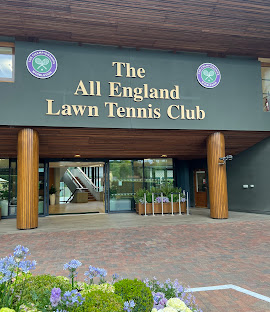
The All England Croquet club was formed in Wimbledon in 1868. Three grass courts are still devoted to the sport.
Flat soled shoes are required so the heels won’t mess up manicured lawns.
Variations of the game;
- Golf croquet – the most popular and accessible version globally in where players take turns striking their balls in a set rotation.
- Association croquet – International standard for serious competitions. High degree of strategy where a player can gain extra strokes by hitting opponent’s balls and scoring in a hoop.
- American Six Wicket croquet – Played primarily in North America, this version combines elements of Association Croquet with specific rule adaptations designed to make the game fairer and more tactical on slightly less manicured lawns.
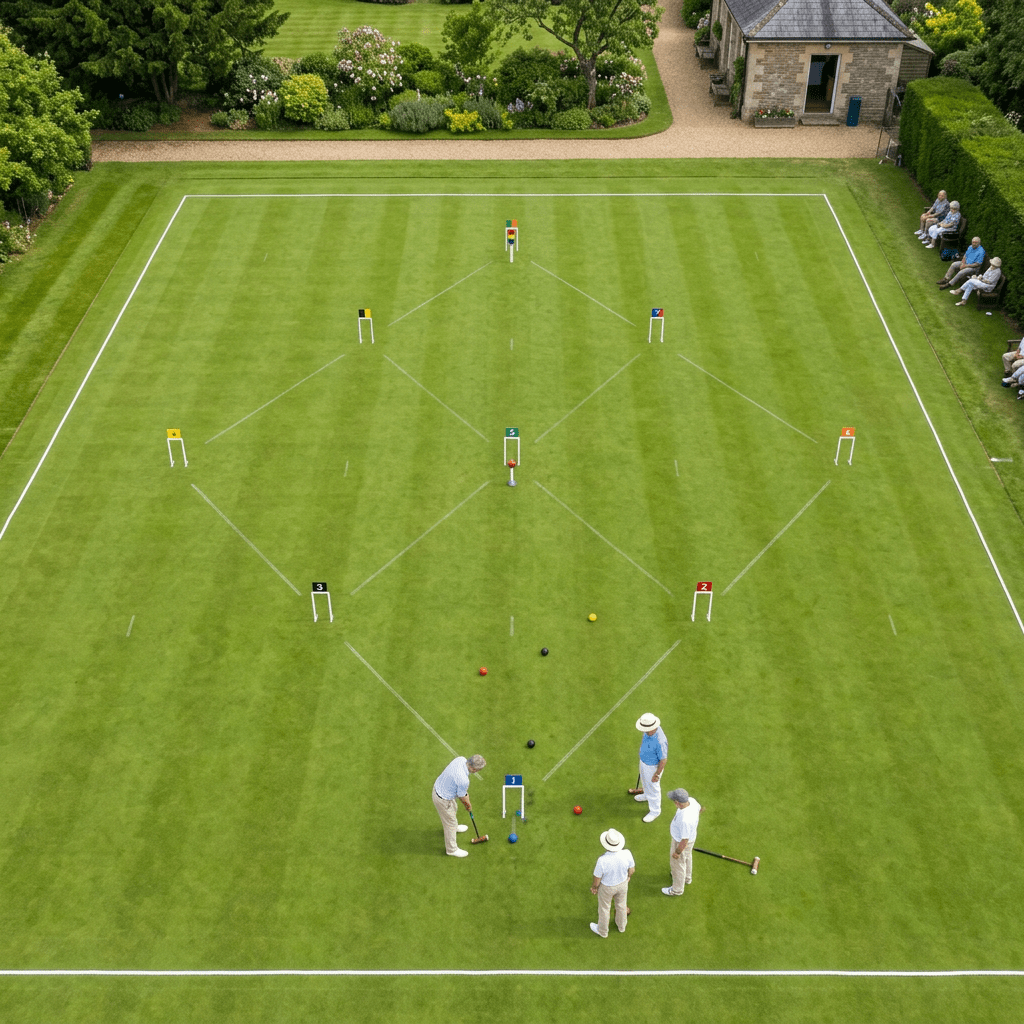
- 9 Wicket – classic American Backyard Version, played with up to 6 players using 9 wickets (wire hoops) placed in a double diamond shape between 2 stakes in a traditional backyard.
In 1900, 10 French athletes, 7 men and 3 women, all competed in the Olympics. Therefore, the bronze, silver and gold were all won by the same country.
Players in the Olympics;
- Gaston Aumoitte, gold in singles one-ball, gold in doubles.
- Georges Johin, silver in singles one-ball, gold in doubles.
- Cretien Waydelich – Gold in singles two-ball, bronze in single one-ball
- Maurice Vignerot – silver in singles two-ball
- Jacques Sautereau – bronze in singles two-ball
- Blanche Aumoitte – competed in singles
- Madame Brohy Filleui – competed in singles
- Mademoiselle Ohnier – competed in singles
Today, croquet is overseen by the World Croquet Federation, which manages international and national championships.
For more elite action, people can participate in major sanctioned tournaments like the U.S. Open Gold Croquet, and the USCA AC National Championship.
How to Play 9 Wicket Croquet
Game overview:
A standard double diamond rectangular lawn officially measures 50 foot wide, 100 feet long, but may be reduced and refined to match the available space.
The game is designed for up to six balls, with anywhere from 2 to 6 players. A game usually lasts from 1 to 2 hours, or until one of the game players “stakes out” by scoring all the wickets, and striking the finishing stake with all the balls on their side.
A coin toss is the determining factor of the team who goes first. The starting “tee” is one-mallet length from the first wicket.
There are two sides: the “hot colors” (red/yellow/orange) and the “cool colors” (blue/black/green). When playing with four balls, blue and black face off against red and yellow. With just two players, all balls must come into play.
For complete rules, go to (http://www.psy.vanderbilt.edu/faculty/blake/Croquet/Rules.html). There is definitely skill that goes into playing a game of croquet.
9-Wicket croquet is a casual backyard game, so the rules can change and be created as you play.
I happened to come across a croquet club that is located about 5 miles from my house that offer free lessons and free play every Tuesday!
To find a croquet club near you in the United States, use the USCA, or the United States Croquet Association, or the Oxford Croquet Global Club Map. These searchable directories allow you to filter locations by state, region, or zip code to find court addresses, contact details, and visitor policies.
 CHARLEY WAFFLE
Leave a comment